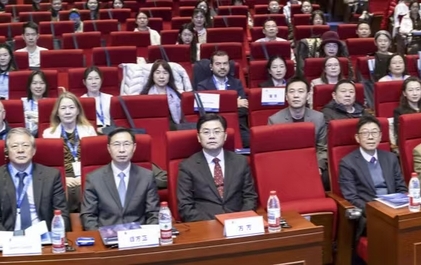

From November 6 to 8, the Beijing Forum 2026 DI-IDEA Symposium, themed “Reshaping Human Learning: The Future of Digital Intelligence Education,” brought together university leaders, heads of teaching and learning centers, researchers and industry representatives from more than 30 universities and institions across 11 countries, including China, Kazakhstan, Thailand, Singapore, South Korea, Vietnam, the United Kingdom, Ireland, Austria, the United States and New Zealand. The symposium was organized by the Digital Intelligence International Development Education Alliance (DI-IDEA) and the Global Dialogue on the Future of Learning Secretariat. Participants discussed how AI is changing the way people learn, what skills educators will need and where to draw the boundaries for AI use in education.

Symposium participants
The symposium opened on the morning of November 7 in the Auditorium, Zhihua Building at Peking University. Opening remarks were delivered by Fang Fang, Vice President of Peking University, and Tan Fangzheng, President of Higher Education Press and Editor-in-Chief of Frontiers of Digital Education. Sun Hua, Director of Peking University’s Office of the Provost and Center for Excellent Teaching and Learning, and Secretary General of DI-IDEA, chaired the session.
In his address, Professor Fang Fang noted that artificial intelligence is transforming the way knowledge is produced and applied, and prompting a rethink of what people need to learn and how they learn. He shared three observations. First, universities should remain committed to a people-centered approach to education, ensuring that digital and intelligent technologies serve people's self-directed learning and holistic development. Second, supporting faculty development is essential; curricula and assessment shape how students use AI. Third, deeper openness and cooperation call for respecting differences and accumulating shareable, practice-based evidence. He stated that Peking University will continue to support the development of DI-IDEA and work hand in hand with its members to provide more stable support for digital and intelligent education cooperation among universities worldwide.
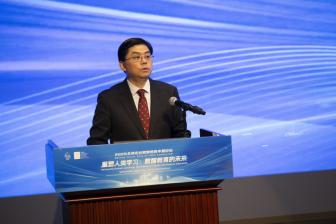
Fang Fang, Vice President of Peking University, delivers opening remarks
The opening remarks were followed by the launch of a special issue on Future Faculty Development in Frontiers of Digital Education. Tan Fangzheng launched the issue with its guest editors, Sun Hua, Simon Walker, Professor at University College London, Julia Chen, Director of the Educational Development Centre at The Hong Kong Polytechnic University, and Ho Shen Yong, Principal Lecturer in the School of Physical and Mathematical Sciences at Nanyang Technological University.
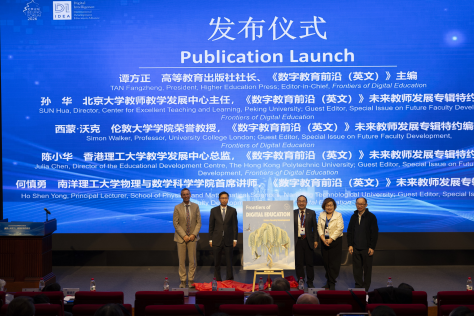
Launch of the special issue on Future Faculty Development in Frontiers of Digital Education
Four speakers gave keynotes. Song Jie, Dean of the School of Advanced Manufacturing and Robotics at Peking University, spoke on “From Basic Research to Future Industries in the AI Era.” Stefanie Lindstaedt, Founding President of Interdisciplinary Transformation University Austria, presented “Education for Future Jobs: IT:U as a Living Lab for the AI-Native University of the Future.” Lu Dan, President of Geely Talent Development Group, spoke on “Toward a Digital-Intelligence-Native University: Creation and Transformation.” Sarah Main, Vice President of Elsevier’s Global Research Collaboration Unit, presented “Preparing Future Researchers in the Age of AI.”
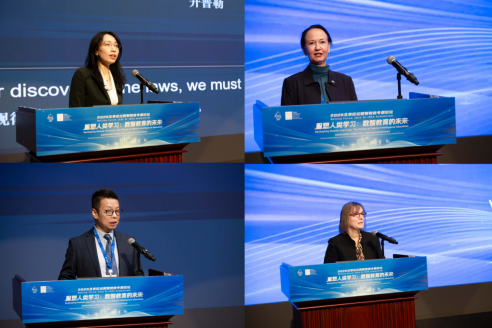
Morning keynote speakers
The symposium also launched AI Literacy for Future Educators, a course introduced by Wang Zhouyi, Deputy Director of Peking University’s Center for Excellent Teaching and Learning, Samantha Smidt, Vice Provost for Academic Affairs at Nazarbayev University, Claire Gordon, Director of the Eden Centre for Education Enhancement at the London School of Economics and Political Science, and Zhang Lei, General Manager for the Beijing Region at Chaoxing Group.
Zhang Ying, Boya Distinguished Professor at Peking University, Liu Zhi, Associate Professor at Peking University’s Guanghua School of Management, and Hai Feng, Director of Solution and Customer Success for North China at Doubao Work, launched The AI-Era Talent Landscape—Seeing Future Talent in the Wild.
At the signing ceremony that followed, Lingnan University and DI-IDEA signed a memorandum of understanding, and XINWEI AI (HAI NAN) CO., LIMITED signed a strategic cooperation agreement with DI-IDEA.
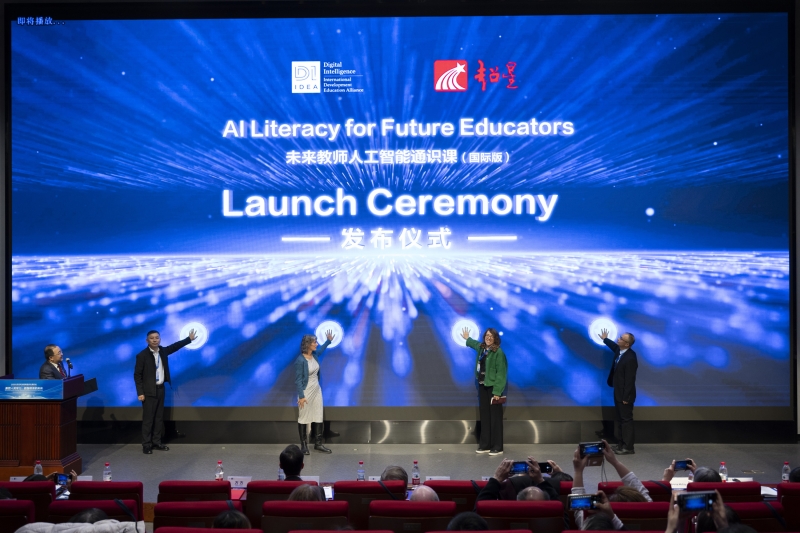
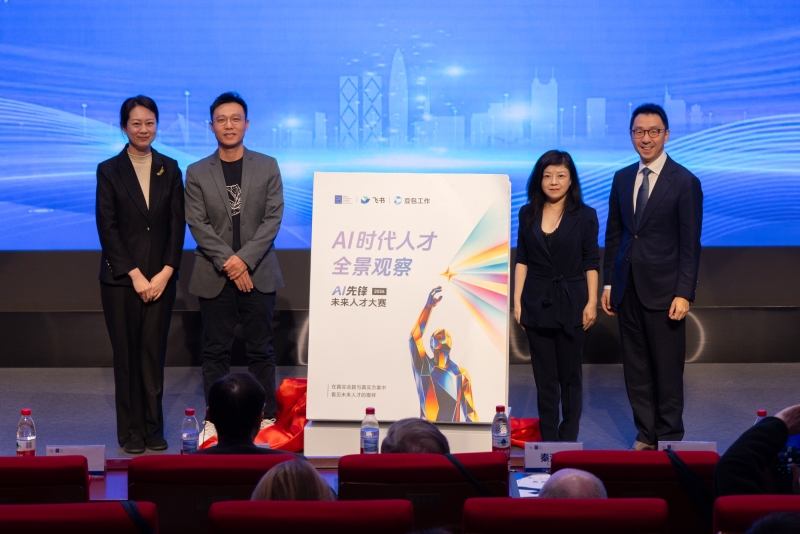
Course and book launches
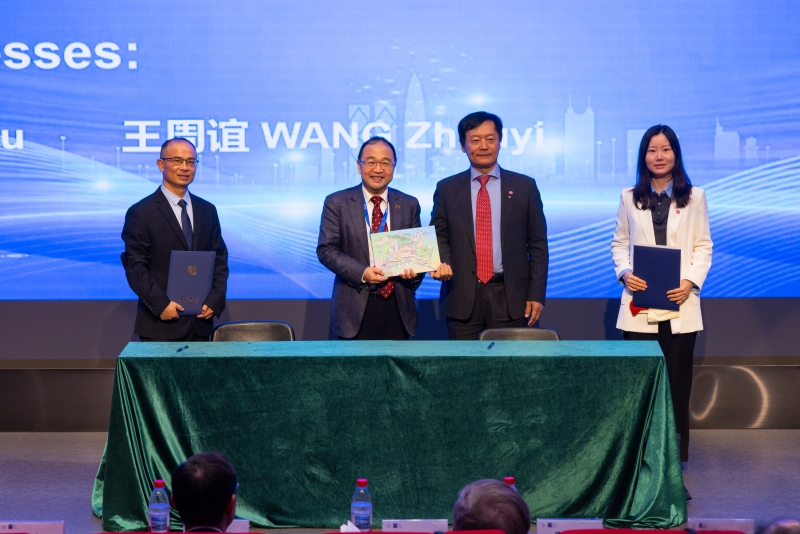
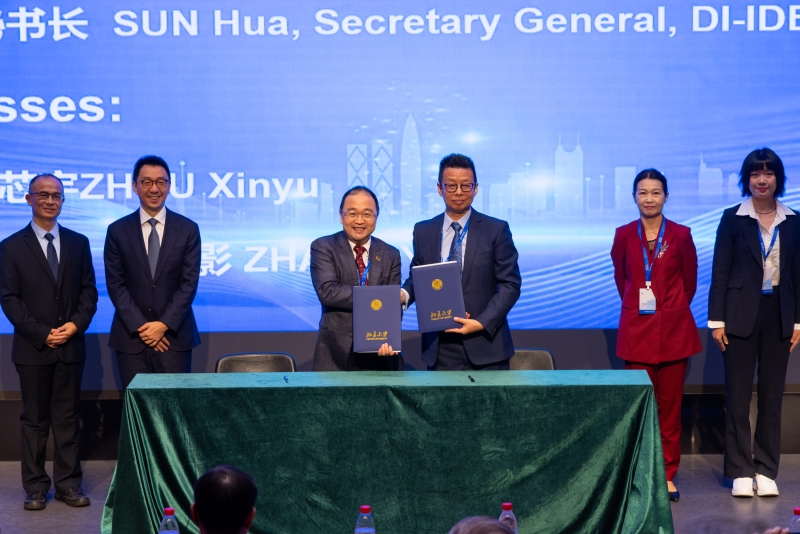
Signing ceremony
The presidents’ panel was moderated by Zhang Ying, Deputy Secretary General of DI-IDEA and Boya Distinguished Professor at Peking University. S. Joe Qin, President of Lingnan University, Jaeho Yeom, President of Taejae University, Emma McCoy, Vice President and Pro-Vice-Chancellor for Education at London School of Economics and Political Science, Ian Rivers, Associate Principal of the University of Strathclyde, and Cao Jiannong, Vice President of The Hong Kong Polytechnic University, discussed the mission and governance of universities in the age of AI.
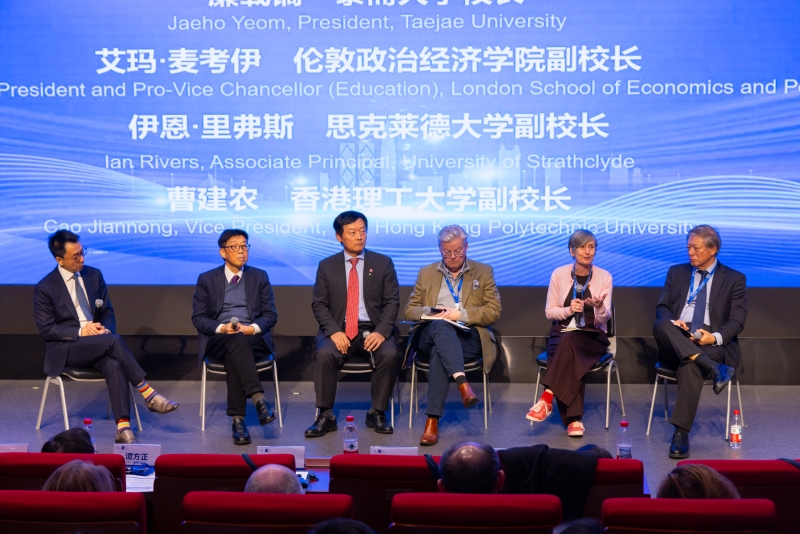
Presidents’ panel
On the afternoon of November 7, the session was chaired by Wang Zhouyi, Deputy Director of Peking University’s Center for Excellent Teaching and Learning and Deputy Secretary General of DI-IDEA. Naeti Suksomboon, Vice President for Education at Mahidol University, discussed how universities can rethink learning and assessment in the age of AI. Tan Ooi Kiang, Deputy Provost for Education at Nanyang Technological University, outlined NTU Singapore’s 2030 education strategy. Samantha Smidt, Vice Provost for Academic Affairs at Nazarbayev University, shared her university’s experience developing AI that understands Kazakhstan’s language and culture. Robert Vanderlan, Executive Director of Cornell University’s Center for Teaching Innovation, spoke about experiments and ambitions for the future of human learning.
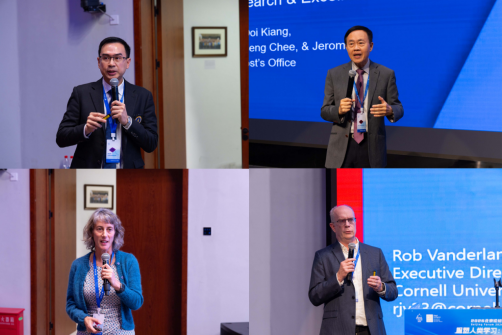
Afternoon keynote speakers
DI-IDEA also launched Education in Ten Years: Practice and Reflection in the Digital Intelligence Era, part of its Digital Intelligence Education book series. The book was unveiled by Wang Heling, President of Beijing People’s Publishing House, together with Sun Hua, Samantha Smidt, Claire Gordon, Julia Chen and Ho Shen Yong.
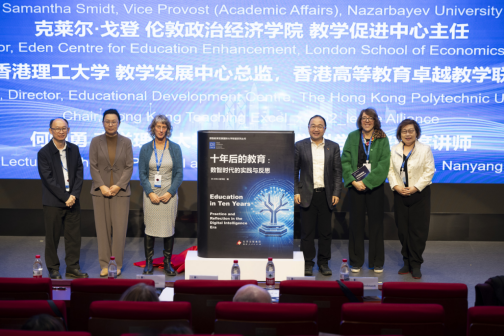
Launch of Education in Ten Years
Two rpanels followed, both moderated by Zhang Ying. Claire Gordon, Julia Chen, Charlotte Holland, Dean for Global Relations at Dublin City University, Ho Shen Yong, and Linjue Wang, Assistant Director for New Faculty Initiatives at the University of Michigan, discussed international experience in faculty teaching development. Simon Walker, Theo Lynn, Executive Dean of the Business School at Dublin City University, Dragan Gašević, Chair Professor at The University of Hong Kong, Danping Wang, Associate Professor at the University of Auckland, and Mark Levine, Professor at Minzu University of China, discussed recent directions in learning analytics and AI research in education.
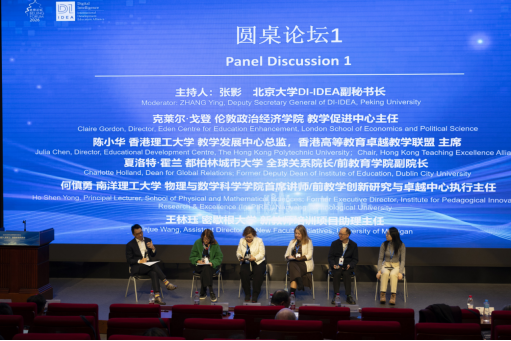
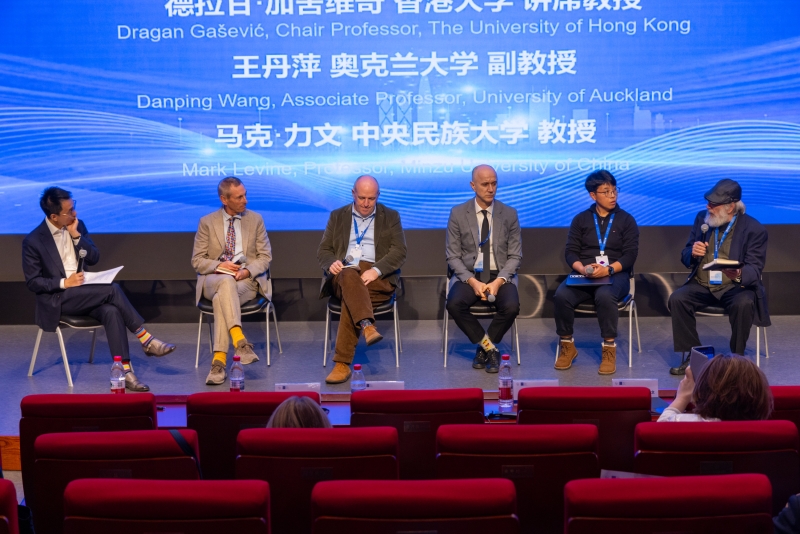
Afternoon panels
On the morning of November 8, Wang Zhouyi chaired the awards ceremony for the Third Global Digital Intelligence Education Innovation Competition at Yenching Academy, Peking University. The competition drew 2,328 entrants from more than 50 universities worldwide and received 590 project submissions in the preliminary round. After seven months of competition, it awarded 13 gold prizes, 32 silver prizes, 95 bronze prizes, 45 merit awards and 19 special awards.
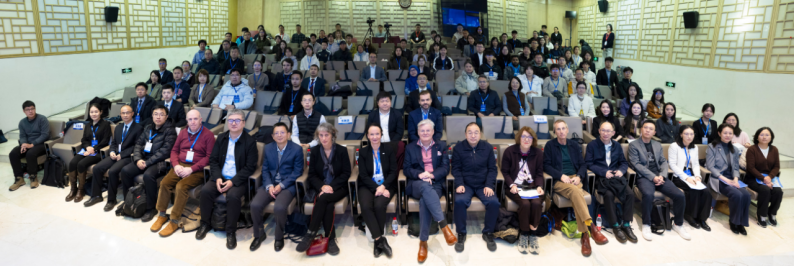
Group photo at the competition awards ceremony
Representatives of three gold-winning projects presented their work. Jiang Jiazheng, representing the AI for Science track, presented “An Integrated Space–Air–Ground Sensing Platform for Great Wall Heritage Monitoring and Assessment.” Tang Zhenyi, representing the AI for Teaching and Learning track, presented “Exploring Students’ Participation in AI Agent-Supported Small-Group Seminars.” Li Wei, representing the AI for Medicine track, presented “‘Shu Tong,’ a Teaching-Case-Driven AI Agent for Medical Education.” The session also featured the AI for Future Talent Competition 2026, where Hai Feng gave a presentation titled “Real Questions, Real Wisdom — The First-Line Answer to Talent Standards in the AI Era.”
The closing panel was moderated by Feng Fei, Director of the Digital and Intelligent Education Office in Peking University’s Office of the Provost. Liu Deying, Dean of Peking University’s School of Innovation and Entrepreneurship, Meng Xiaoliang, Chief Scientist at the Student Engineering Training and Innovation Practice Center of Wuhan University, Li Daliang, Executive Deputy Director of the Office of Education Administration at Sun Yat-sen University, and Yu Chen, Director of the Data and Project Management Office at the National Center for Health Professions Education Development, discussed how AI can help develop the next generation of innovators.
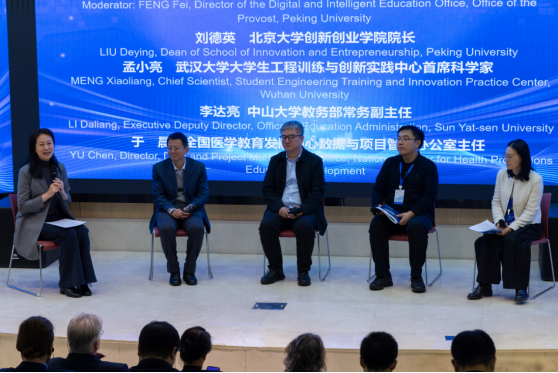
Closing panel